Medical Grade Fabric Acoustic Panels | Stockholm Small Animal Referral Clinic Privacy Upgrade
Project Challenge
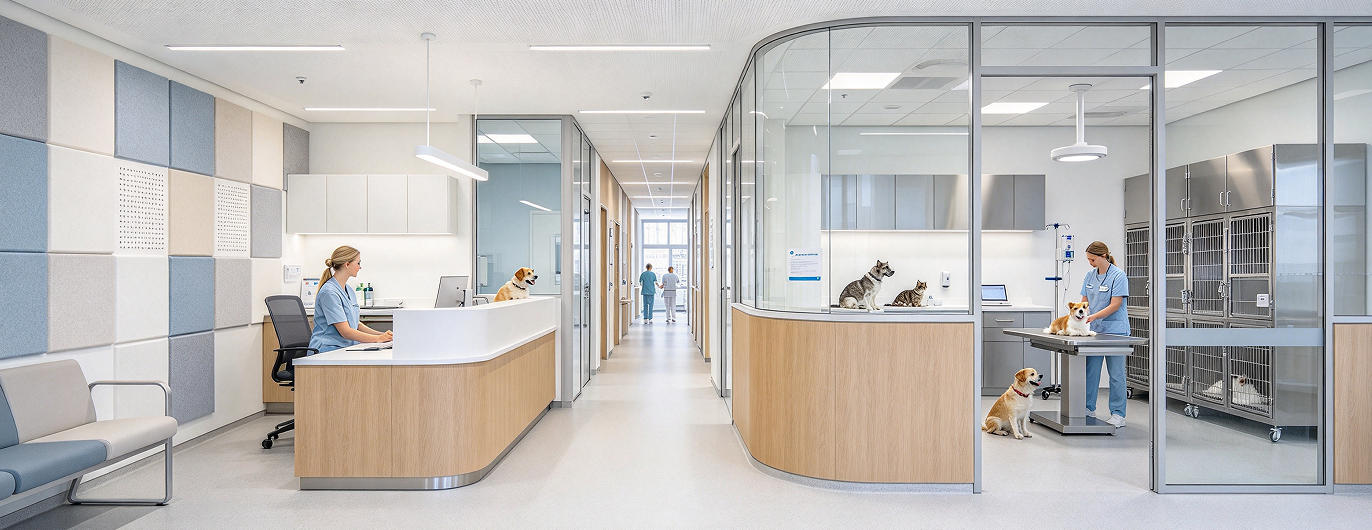
This 320㎡ small specialty animal referral clinic in central Stockholm handles emergency cases, post-operative observation and outpatient consultations. It features tiled walls, stainless steel fixtures and easy-clean surfaces built for clinical hygiene — but hard reflective surfaces and barking animals create severe inter-room sound leakage. Noise from treatment rooms stresses animals in adjacent observation wards, increasing recovery time and complicating diagnosis. The clinic requires acoustic materials that are waterproof, stain-resistant, wipe-disinfectable and scratch-resistant, fitting clinical hygiene standards.
Our Solution
We installed full-height high-density fiberglass core medical-grade fabric acoustic panels in treatment rooms and observation wards, with an NRC rating of 0.85–1.0. The outer face uses medical-grade water-resistant stain-retardant fabric that stands up to daily wipe-down disinfection and resists animal scratches. The panels effectively cut airborne sound transmission between rooms, reducing animal stress from external noise and keeping consultation conversations private. In public waiting areas and corridors we used perforated acoustic panels with mineral wool backing, NRC 0.80+, with smooth dense easy-to-clean surfaces to control reverb in public zones.
All materials meet EN 13501 Class A fire safety standards and ultra-low VOC emission requirements, fully compliant with EU veterinary clinical facility norms. We built out room by room in overnight shifts, keeping the emergency clinic partially open the whole time.
Project Results
Inter-room sound leakage dropped by an estimated 43%, and animal stress indicators during observation and recovery dropped notably. Veterinary staff reported clearer verbal communication during procedures and less vocal fatigue. Owner satisfaction scores for visit comfort are up 34%, and the clinic has been able to take on more sensitive post-operative cases thanks to quieter recovery wards.